|
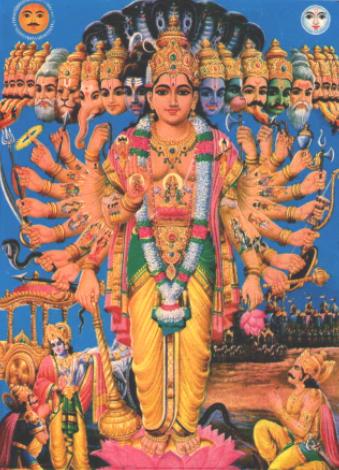
aham AtmA bhutAnAM sarva bhutAshaya sthitaH
aham Adishcha madhyaM cha butAnAM anta eva cha
I am the essence of all beings, abiding in all beings.
I am the beginning , the middle and the end of all beings. - Krishna in Gita
The words Ishvara(m) and IshvarI(f) derive from the root Ish, which
means to control, to govern, to rule, to command, to be master or lord of, etc. Isha means one who controls, governs,
etc. Ishvara and IshvarI, in turn, mean the higher controller, higher governor, etc.
The words deva(m) and devI(f) derive from the root div
which means to shine or to be bright. deva/ devI then mean one who shines, or one who is brilliant, or a being
of light. div as noun(f), I suppose, means a realm of light. devas and devis are denizens of this
realm of light.
A note about word meanings: While it is tempting to translate the Sanskrit words Ishvara and deva as God,
and and IshvarI and devI as Goddess, such translations are not accurate and are
more likely to cause confusion rather than help an average Westerner understand ancient Indian texts. Such a rendering of
Ishvara, deva and devI would be at best a very rough approximation. These four words
are unique to Indian thought and are best not translated. To preserve the integrity
of the original thoughts of those who introduced such words, they should be carried over into other languages without translation.
I hope visitors to this website are as curious about Ishvara and IshvarI as
I am. If not, I hope some of my curiosity rubs off on them. Many people claim to believe in God and yet more often than not,
two people professing belief in God are not likely to agree with each other about who God is. As for me, I do not claim to
know God and will therefore not talk about God here. However I am immensley fascinated with Ishvara
and IshvarI, and what better place to talk about them than on the page which includes their name. I
do not claim to know ishvara or IshvarI any more than I know god but I think we can say some things about them.
Here, I will write only about what I think I know about Ishvara and IshvarI. But first I
will say a bit about devas and
devIs.
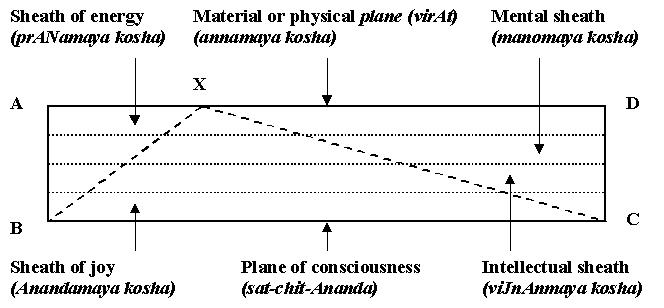
Figure 11 below shows the personality profile, XBCX, of the familiar guy/gal X, but this time I am showing
his/her personality profile with dotted lines. This is the X we have seen before. Now imagine another
being, also called X, whose personality profile is not XBC, but rather XABCDX. Clearly, there is a big difference between
the the personality profiles of our guy/gal X and this new being X. I will refer to this new being as deva X or devi X. Similarly, we can conceive of
a deva Y or devI Y, with personality profile YABCDY. (Compare this Y to the Y in figure 4 whose personality profile is YBCY.) The devas or devis, X and Y are quite different
from the our old friends X and Y, yet not not a whole lot different from each other.
Ishvara (or IshvarI), on the other hand, is the being whose total personality is ABCD without identification in the material
plane, such as with devas/devIs, X and Y. Ancient Indians describe the Ishvara (or IshvarI)
as saguNa brahman or brahman with guNas (attributes or qualities). Ishvara is also referred to as nArAyaNa
or the home of man. When they speak of Ishvara as not manifest in the material plane, they refer to him as nirguNa brahman (i.e.,
brhaman without attributes or qualities) who is represented by the plane BC, the plane of sat-chid-Ananda.
Incidently, I have not seen the words Ishvara used in plural form in any texts I am familiar with, the word deva is used
in both its singular and plural forms. It is clear that devas are forms of saguNa
brahman.
In Personal growth and in Yoga, we saw that X can grow his personality profile by right karma, perhaps aided by yoga.
How far can X grow? In bhagavad gItA, kRSNa answers this question for us.
"sarva bhutasthaM AtmAnaM sava
bhutAni chAtmani
ikSate yoga yuktAtmA sarva sama darshana"
A person who has integrated himself with yoga sees everything with equanimity, sees
all beings in himself and sees himself in all beings. That sounds suspiciously like kRSNa is describing someone almost
like himself.
If personality profile of Ishvara is indeed ABCD, it implies that ishvara projects the plane of sat-chit-Ananda
in the the material plane and in the subtle and causal fields quite differently from the rest of us. Ancients have a name
for his projection in the material plane - satyaM-shivaM-sundaraM or truth-goodness-beauty.
We can see that sat or being-ness projects as truth, chit or consciousness projects as goodness and Ananda
or joy projects as beauty in the material plane. Thus we can see Ishvara in the material plane as truth, goodness
and beauty.
In the final analyis, while we can speculate all we want about Ishvara, the best way to know Ishvara is
to seek him out and get to know him. I will stop with this statement from Ishopanshad:
IshAvAsyaM idaM sarvaM yatkiNcha jagtAM ajagat; tena
tyaktena bhuNjitA, mA gRdha, kasya sviddhanaM.
All this, what moves
and what moves not, is pervaded by Ishvara. Abandon it all; experience it and enjoy. Whose are the riches?
|