|
|
 |
|
shrI hanumAna
manojavaM mArutatulya vegaM, jitendriyaM buddhimatAM
varishThaM,
vAtAtmajaM vAnarayuth mukhyaM, shri rAm dutaM sharaNaM prapadye.
I seek refuge
in Shri Ram's envoy, leader of the apes, who, born of wind, roves at the speed of wind, guided by his mind, who has control
over his sense organs and who excels in intelligence.
Here
is one way to understand the universe. If we assume that our personality is helpfully modeled by the theory of koshas, as I do, that is a good place to start. We can start with this model
of us and "build" the entire universe based on it. In other words, I am proposing to build an universe in our own image. Once
we construct our universe, we can compare it with the world we live in and see if the model fits reality and vice versa. In
the vedic lore, it is said that the creator, brahmA, had his divine architect,
vishvakarmA (Universe-maker), design the world for him. Let us see if we can come up with a design similar
to his.
In figure 2, starting with me as an "onion", I make a cut from an extremity of my personality to its center. I
then move the two edges away from each other as shown by arrows till the heads of both arrows are pointing straight up. I
will then move the two arrows sideways away from each other to arrive at a "universe" shown in figure 3. This universe is
like a coin with two faces and some "filling" between the two faces.
One face, the upper face, corresponds to annamaya kosha or the
sheath of food. It is the material or physical plane. It is the gross body of the universe. In vedanta
it is called virAT which simply means vast. It is the world
we live in and see in everyday life.
The other face, the lower face, is the stretched out core consciousness. It's
known in vedanta as (the plane of) sat-chit-ananda (being- consciousness-joy). Upanishads also describe it as the basis or foundation (AyatanaM)
of what rests on it. Stretching of the center of personality or core consciousness is what imparts immanance to chit or consciousness and universality to Eternal Law. In this step, I stretched my essence
to the farthest corners of the universe and created an "essential plane" for the universe to rest on.
The space between
the two planes corresponds to the four sheaths of the individual personality between core consciousness and the gross body.
In Vedanta, the upper three layers are known as the (world of) hiraNyagarbha
(golden seed or germ or fetus) and corresponds to the subtle body in an individual. Thus it forms the subtle body of
the universe. Finally, the lowest layer makes up the causal body of the universe and is called AkAsha.
This is my blueprint for reconstruction of the
universe, about which is said:
sarvaM khalv idaM brahman
All this is verily brahman. (Chandogya Upanisad, 3.14.1.)
The
word brahman derives from the root bR to spread out, to extend
or to occupy. To underscore that brahman is not the universe as science understand it, I will render it as Vedic
universe.
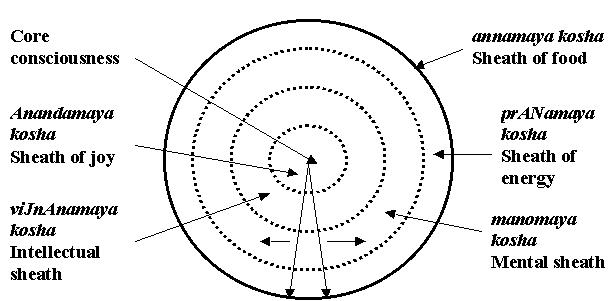
Figure 2. onion" at the start of folding and stretching to "construct" a universe.
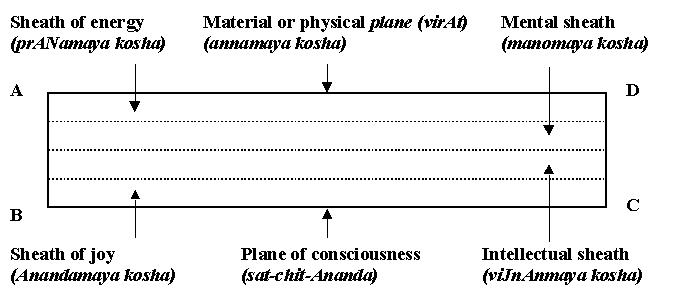
Figure 3. Universe as a "coin" with two faces and a connecting tissue between the faces. The three upper layers here make
up the subtle body of the universe and are referred to in Vedanta as (the world of) hiraNyagarbha (literally golden
fetus, but usually rendered as golden germ or the golden seed). The lowest layer forms the causal body of the universe and
is called the AkAsha. It rests on the essential plane.
|
|
|
Inspite of all my fanciful talk of reconstructing the universe, we should
realize that figure 3 is merely a redrawn version of figure 1. In this figure, the core consciousness or the essence is
spread along the base BC / foundation / substratum of the universe whereas in figure 1 it was the (unseen) center of all the
circles. This leap from the personhood of figure 1 to the universehood of figure 3 is based on the essential and inherent
immanence of conscioussness. One must realize that creation is possible because of the immanence of consciousness. It is this
immanence that maintains order in the creation and is the basis of Rta.
The outer most solid circle (gross body) of figure 1 is now stretched out to form the "physical universe", AD, in figure 3.
The dotted circles of figure 1 become the dotted straight lines in figure 3. The sheaths of figure 1 are now layers of figure
3.
Ancients have used two interesting terms while discussing the nature of creation and
our place in it. These are lIlA usually written
as leela and mAyA. I understand leela
as the process of creation. My exercise of going from figure 1 to figure 3 is an exercise in leela
or the big bang of the ancients. mAyA, on the other hand, is simply the reverse process,
i.e., the process by which the universe goes back from figure 3 to figure 1.
Uncannily, the reverse process goes from figure 3 to a whole lot of figure 1's.
Ancients have used the term gaNa to describe the entities represented by figure 1. The
term gaNa represents members of a set. Implicit in the use of this term is the idea
that many sets, or gaNas, of the type represented by figure 1 result from creation
and that each is a set since it has many individual members and since each set is distinguishable from other sets. (Two attributes
of a set are quality and quantity. Quality differentiates one set from another; quantity is the number of members in the set.)
Creation is thus seen as resulting from differentiation and multiplication, i.e. formation of sets from the One.
This process is mAyA.
mAyA, thus, is the process that creates individuals
from the universe or the process of going from figure 3 to figures 1 or going from One to many. leela
is the prerogative of the creator; mAyA is our doing or undoing. The One
who creates gaNas or sets is hence known as gaNapati (lord
of the sets) or gaNesha (the controller of the sets), or more
commonly as the lord of categories.
I often resort to descriptive terms, shallow and deep, in reference to personality
as it appears in the universe of figure 3. Thus shallow implies closer to material plane, AD, and deeper indicates depth within
the subtle layers of our personalities.
|
|
|
|
|
|
|
|
|
|
|
|
|
|
|